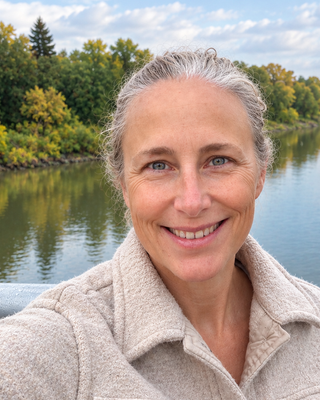
Pamela Vialoux, Art Therapist, Psychotherapist, and Spiritual Health Practitioner
Pamela is trained in Art Therapy, psychotherapy, Spiritual Care, and Clay Field Therapy. Her work draws from attachment-based, narrative, person-centred, expressive arts, sensory and nervous-system-informed approaches. Clay Field Therapy is a particular area of interest, offering a primarily non-verbal, sensory and body-based way of working with trauma, regulation, attachment, and developmental needs. For people who find that words alone are not enough, art and sensory-based approaches can offer another way into the therapeutic process.
Pamela also developed the Nest Program, an approach to supporting individuals and families facing serious illness, dying, grief, and the emotional and spiritual questions that can emerge around the end of life. Drawing upon her background in palliative care, Spiritual Care, psychotherapy, and art therapy, Nest creates space for meaning-making, expression, relationship, legacy, and the many emotions that accompany mortality and loss.
Her work in psychedelic integration provides a supportive therapeutic space for people seeking to understand and integrate experiences they have had with psychedelics. Pamela approaches integration through psychotherapy, expressive arts, meaning-making, spirituality, and attention to the embodied experience, helping clients explore what an experience may mean within the larger context of their lives. Psychedelic integration does not involve providing or administering psychedelic substances.
At the heart of Pamela’s practice is the belief that therapy should meet people where they are. Some people need words; others need clay, imagery, movement, metaphor, silence, play, nature, or creative expression. She brings a compassionate and intuitive presence to this work while remaining grounded in research, professional training, and ethical practice.
Pamela welcomes people across the lifespan and strives to create a therapeutic relationship in which clients can feel seen, heard, respected, and supported as they explore what healing, meaning, connection, and belonging might look like for them.